Higher Education Rankings Shaping Academic Futures
Higher Education Rankings play a crucial role in how students and institutions navigate the complex landscape of academia. These rankings not only provide a roadmap for prospective students seeking the best educational experiences, but they also serve as benchmarks for universities striving for excellence. Understanding the history and development of these ranking systems reveals their profound impact on educational choices and institutional policies alike.
From the emergence of various ranking methodologies to the criteria that evaluate performance, the discussion around higher education rankings is multifaceted and continues to evolve. As institutions seek to enhance their standings, the implications of these rankings extend beyond mere numbers, influencing funding, strategic planning, and even student decision-making.
Overview of Higher Education Rankings
Higher education rankings serve as a framework for assessing and comparing institutions of higher learning on various metrics. These rankings help prospective students, parents, and educational policymakers navigate the complex landscape of higher education choices. By providing a clear perspective on the relative performance of institutions, rankings play a pivotal role in shaping educational decisions and institutional reputations.
The historical development of higher education rankings began in the mid-20th century, with early efforts focusing primarily on academic reputation and research output. Over time, these systems evolved to incorporate a broader range of criteria, including student satisfaction, graduation rates, and financial resources. The introduction of global rankings in the late 1990s, such as the Times Higher Education World University Rankings and the QS World University Rankings, marked a significant shift, allowing for a more comprehensive comparison across international borders.
This evolution reflects the increasing demand for transparency and accountability in the higher education sector.
Importance of Rankings for Students and Institutions
Higher education rankings hold significant importance for both students and educational institutions. For students, rankings provide valuable insights into the strengths and weaknesses of various universities, aiding in the selection of institutions that align with their academic and career aspirations. Some of the key factors that students consider include:
- Academic Reputation: A university’s reputation among peers and employers can significantly impact a student’s future job prospects.
- Graduation Rates: Higher graduation rates often indicate effective student support and resources, which can enhance the overall educational experience.
- Research Opportunities: Institutions with robust research programs can provide students with hands-on experiences that are critical for their academic development.
For institutions, rankings can influence enrollment numbers, funding opportunities, and overall prestige. A strong ranking can lead to:
- Increased Applications: High rankings often attract more applicants, allowing institutions to be more selective in their admissions processes.
- Enhanced Funding: Rankings can impact government and private funding, as higher-ranked institutions may receive more financial support.
- Global Partnerships: Well-ranked universities are more likely to engage in collaborations with other institutions worldwide, facilitating knowledge exchange and innovation.
In summary, higher education rankings not only serve as a guide for students making crucial educational decisions but also act as a benchmark for institutions striving for excellence in teaching, research, and community engagement.
Major Ranking Systems
The global landscape of higher education is significantly influenced by various ranking systems. These systems not only impact institutional reputation but also guide prospective students in their educational choices. Among the multitude of ranking frameworks, two of the most prominent are the QS World University Rankings and Times Higher Education (THE) World University Rankings. Each of these systems employs unique methodologies and criteria to evaluate universities around the world.
Leading Global Ranking Systems
The QS World University Rankings and Times Higher Education are the two leading global ranking systems, each with distinct methodologies. The QS ranking focuses primarily on academic reputation, employer reputation, and faculty/student ratios. In contrast, Times Higher Education emphasizes teaching, research, citations, international outlook, and industry income. Both systems utilize a combination of quantitative and qualitative data to assess universities, which can lead to variations in their rankings.
For instance, QS relies heavily on surveys to gauge academic and employer perceptions, while THE incorporates comprehensive data analysis on research impact and institutional performance.
Methodological Comparisons
Understanding the methodologies of these ranking organizations reveals their differing focuses and approaches. The methodologies can be summarized as follows:
- QS World University Rankings:
- Academic Reputation (40%)
- Employer Reputation (10%)
- Faculty/Student Ratio (20%)
- Citations per Faculty (20%)
- International Faculty Ratio (5%)
- International Student Ratio (5%)
- Times Higher Education World University Rankings:
- Teaching (the learning environment) (30%)
- Research (volume, income, and reputation) (30%)
- Citations (research influence) (30%)
- International Outlook (staff, students, research) (7.5%)
- Industry Income (knowledge transfer) (2.5%)
These methodologies illustrate how different ranking systems prioritize various aspects of university performance. While QS places greater weight on reputation, THE emphasizes research outputs and their societal impacts.
Criteria for Assessment, Higher Education Rankings
The criteria used in these rankings are crucial in determining how institutions are evaluated. Each ranking employs specific indicators, reflecting their individual priorities and philosophies about higher education quality. The criteria can be Artikeld as follows:
- QS World University Rankings:
- Academic Reputation
- Employer Reputation
- Faculty/Student Ratio
- Citations per Faculty
- International Faculty Ratio
- International Student Ratio
- Times Higher Education:
- Teaching Quality
- Research Volume and Quality
- Citation Impact
- International Collaboration
- Knowledge Transfer
Both ranking systems aim to provide a comprehensive evaluation of higher education institutions, yet the variance in criteria highlights their unique perspectives on what constitutes excellence in education.
“Different institutions shine in different areas, which is crucial for prospective students to consider.”
Through these rankings, students, educators, and policymakers can gain valuable insights into the global higher education landscape, allowing them to make informed decisions based on institutional strengths and areas for improvement.
Impact of Rankings on Institutions
The influence of higher education rankings on academic institutions has grown significantly in recent years. As universities strive for excellence, they are increasingly adapting their strategies and policies to improve their standings in these competitive evaluations. This impact extends beyond mere reputation; it shapes institutional behavior, funding decisions, and resource allocation, ultimately affecting the educational landscape.Rankings have become a crucial factor in guiding university policies and strategic planning.
Institutions often analyze their standings to identify areas of improvement and develop initiatives designed to enhance their performance. For example, universities may prioritize research output, faculty qualifications, or student satisfaction metrics based on the specific criteria used by ranking organizations. This focus on measurable outcomes can drive universities to implement new programs, invest in faculty development, or improve student services to boost their rankings.
Influence on Funding and Resource Allocation
The correlation between a university’s ranking and its financial support is significant. Higher-ranked institutions tend to attract more funding from various sources, including government grants, private donations, and partnerships with industries. This funding advantage allows them to invest in facilities, research projects, and student services. Conversely, lower-ranked institutions may struggle to secure the same level of resources, which can hinder their growth and ability to compete effectively.The following points highlight how rankings influence funding and resource allocation:
- Government Funding: Many governments allocate resources based on performance metrics, including university rankings. High-ranking institutions often receive more public funding, which can reinforce their status and allow for further investment in quality education.
- Private Donations: Alumni and philanthropic organizations are more likely to contribute to institutions that are recognized for their excellence. A strong ranking can enhance the appeal to potential donors, fostering a cycle of financial support.
- Research Grants: Funding agencies typically favor institutions with strong research reputations. Higher-ranked universities may secure more competitive grants, which can further bolster their academic programs and facilities.
- Tuition Revenue: Institutions with higher rankings often attract a larger pool of applicants, allowing them to maintain or even increase tuition rates. This revenue can be reinvested into the institution to enhance quality.
Real-world examples illustrate these dynamics effectively. For instance, the University of California, Berkeley, consistently ranks among the top public universities globally. As a result, it attracts significant funding from both state and federal sources, enabling it to invest heavily in research initiatives and campus facilities. In contrast, institutions that struggle with rankings, such as certain regional colleges, find it challenging to compete for similar funding opportunities, impacting their growth and student offerings.Overall, the impact of rankings on higher education institutions is profound, shaping their strategies, funding, and ultimately their ability to serve students and advance knowledge.
Student Perspectives on Rankings

Source: cloudfront.net
Students today have an array of resources at their disposal when it comes to selecting a higher education institution, and rankings play a significant role in their decision-making process. These rankings, often presented in an easily digestible format, help students compare various colleges and universities based on multiple criteria such as academic performance, faculty quality, and campus facilities. However, how students perceive and utilize this information varies greatly.
Student perceptions regarding the reliability of these rankings can influence their choices significantly. A survey conducted by the Pew Research Center found that nearly 60% of prospective students consider college rankings as a “very important” factor in their decision-making process. Furthermore, a study by the Education Advisory Board highlighted that students often view rankings as a reflection of the institution’s reputation rather than a holistic measure of their fit.
This underscores the importance students place on rankings, even as they acknowledge potential limitations.
Importance of Rankings Compared to Other Factors
While rankings are a valuable tool in the college selection process, they are not the only factors that influence students’ choices. Other elements, such as campus culture, location, and financial considerations, often weigh heavily on students’ minds. Understanding the balance between these elements is crucial for prospective students.Factors that contribute to student decision-making include:
- Campus Culture: Students often seek environments where they feel they can thrive socially and academically. A vibrant campus life, along with clubs and activities that align with their interests, can outweigh a higher ranking.
- Location: Proximity to home, urban versus rural settings, and climate can significantly affect a student’s choice. Many students prefer institutions located in areas that offer recreational opportunities or are close to family.
- Financial Aid and Affordability: The cost of attendance and the availability of scholarships can be a dealbreaker. A lower-ranked school may offer better financial aid packages, making it a more attractive option despite its ranking.
- Academic Programs: Specific programs and majors offered by institutions can heavily influence decisions. A school might rank lower overall, but if it excels in a particular field of study, it can be highly desirable for students pursuing that path.
The interplay between these factors and rankings reveals a complex decision-making process. While rankings provide a framework for evaluation, they are just one piece of the puzzle. Such nuances in student perspectives highlight the importance of considering multiple factors when making educational choices.
“Students often view rankings as a reflection of a school’s reputation rather than a detailed account of their personal fit.”
Criticism of Higher Education Rankings

Source: timeshighereducation.com
Higher education rankings have become a central feature in evaluating institutions, but they are not without their critics. Many experts argue that rankings can oversimplify complex educational environments, leading to misconceptions about institutional quality. This section delves into common criticisms of these rankings, their potential negative consequences on institutions, and notable historical examples where rankings have failed to accurately represent educational quality.
Common Criticisms of Higher Education Rankings
Critics of higher education rankings often highlight several key issues that undermine their credibility. The criticisms generally focus on the methodology used, the metrics prioritized, and the inherent biases that may skew results. Notably, some common criticisms include:
- Overemphasis on Research Output: Many ranking systems prioritize research output over teaching quality, neglecting the essential educational experiences students receive.
- Data Manipulation: Institutions may engage in “ranking chasing,” manipulating data to enhance their rankings, which can mislead prospective students and stakeholders.
- Limited Scope of Metrics: Rankings typically emphasize quantifiable metrics such as graduation rates and faculty publications, overlooking qualitative factors like student satisfaction and community engagement.
- Contextual Ignorance: Rankings often fail to account for the diverse missions and contexts of different institutions, treating them as interchangeable rather than unique entities.
Negative Consequences of Relying on Rankings
The reliance on higher education rankings can have significant consequences for institutions and students alike. These consequences can manifest in various ways, impacting decision-making and institutional behavior:
- Misallocation of Resources: Institutions may divert funds towards initiatives that improve rankings rather than those that enhance student learning or support services.
- Pressure on Faculty: The focus on metrics can place undue pressure on faculty members to publish more, often at the expense of teaching and mentorship.
- Strategic Enrollment Decisions: Institutions might alter their admissions criteria to attract students with higher standardized test scores, potentially compromising the diversity and inclusion of the student body.
- Inflated Reputation: High rankings may create a false sense of security among institutions, leading them to overlook areas needing improvement.
Historical Examples of Misrepresentation
Historically, there have been instances where higher education rankings have misrepresented institutional quality, leading to misinformed decisions by students and parents. One notable example includes:
The U.S. News & World Report rankings of the late 1990s, which faced criticism for heavily weighting peer assessments, caused institutions to game the system by influencing peer reviews rather than focusing on tangible improvements.
Another instance involved the reputation of for-profit institutions, where rankings tended to favor them based on criteria that did not reflect student outcomes adequately. The emphasis on enrollment numbers and financial performance over genuine educational quality led to significant public backlash and regulatory changes.These examples underscore the need for a critical approach when interpreting rankings, as they can often provide a distorted view of an institution’s true educational value.
Future Trends in Higher Education Rankings
As the landscape of higher education continues to evolve, so too do the methodologies used to rank institutions. Future trends in higher education rankings will likely be influenced by technological advancements, changing societal values, and the growing demand for transparency and accountability in education. Recognizing these shifts is essential for institutions aiming to maintain or improve their standing in an increasingly competitive global market.The integration of technology and data analytics is becoming a game-changer in ranking methodologies.
Institutions are now able to collect and analyze vast amounts of data from various sources, allowing for a more nuanced understanding of performance metrics. Traditional ranking metrics often relied heavily on quantitative measures, such as faculty publications and research funding, but emerging trends suggest a shift towards a more holistic approach that takes into account qualitative factors as well.
Emerging Trends Impacting Rankings
Several key trends are emerging in higher education rankings that highlight a shift towards a more comprehensive evaluation of institutions. These trends include:
- Increased Emphasis on Student Outcomes: There is a growing recognition that student success, including graduation rates and employment outcomes, should play a central role in rankings. Institutions are increasingly being evaluated on how well they prepare their students for post-graduate success.
- Focus on Diversity and Inclusion: Future rankings may incorporate metrics that assess how well institutions support diverse populations and create inclusive environments. This shift acknowledges the importance of equity in education and reflects societal values.
- Global Comparisons and Collaborations: As higher education becomes more globalized, rankings are likely to emphasize international collaborations and partnerships. Institutions that engage in global initiatives may gain a competitive edge in the rankings.
- Use of Non-Traditional Data Sources: Rankings may increasingly rely on unconventional data, such as social media engagement, alumni satisfaction, and community impact, to provide a more rounded picture of institutional performance.
The role of technology and data analytics is central to evolving ranking methodologies. With advanced algorithms and machine learning, ranking organizations can analyze data more effectively, allowing for the identification of trends and patterns that were previously difficult to discern.
Technology and Data Analytics Influence
The adoption of advanced analytics tools has transformed how rankings are calculated and presented. Key features of this trend include:
- Predictive Analytics: Institutions can use predictive modeling to anticipate future trends in student enrollment, retention, and success, potentially influencing their ranking outcomes.
- Real-time Data Collection: Technology enables the continuous collection of data, providing a more dynamic view of institutional performance rather than relying on static annual data submissions.
- Customizable Ranking Criteria: Institutions may have the ability to tailor ranking criteria to better reflect their unique missions and strengths, allowing for more personalized assessments.
The potential for more diverse and inclusive ranking criteria is becoming increasingly relevant. Many stakeholders in education are calling for rankings to reflect a broader array of values that consider social justice, community engagement, and the promotion of inclusive practices.
Diversity and Inclusivity in Ranking Criteria
As the conversation around equity in education grows, so does the call for rankings to incorporate diverse criteria. Important aspects of this trend include:
- Socioeconomic Factors: Rankings may begin to factor in the socioeconomic backgrounds of students, assessing how institutions support and uplift underrepresented groups.
- Community Impact Metrics: Institutions may be evaluated on their contributions to local communities, including service learning and outreach programs.
- Support for Minority Groups: Metrics assessing how well institutions support LGBTQ+ students, students of color, and those with disabilities are gaining traction.
The evolution of higher education rankings reflects a broader shift toward accountability and comprehensive evaluation. As institutions adapt to these trends, they must be proactive in aligning their strategies with the changing expectations of students, stakeholders, and society at large.
Case Studies of University Ranking Improvements
Several universities worldwide have successfully enhanced their rankings through strategic approaches and innovative practices. These case studies reveal effective methods and valuable lessons that can inspire and guide other institutions striving for similar advancements in their standings.One noteworthy example is the University of California, Berkeley, which experienced a significant rise in its global ranking due to a renewed focus on research output and academic reputation.
By investing in faculty development programs and fostering interdisciplinary collaboration, the university improved its research quality and visibility.
University of California, Berkeley
The strategies employed by UC Berkeley included:
- Enhanced Research Funding: The university increased its research grants and funding, allowing faculty to undertake more groundbreaking projects.
- Recruitment of High-Profile Faculty: Attracting renowned scholars contributed to the institution’s research output and academic prestige.
- International Collaborations: Partnering with other top universities worldwide expanded their research opportunities and elevated their global profile.
“Increased visibility in research contributes significantly to an institution’s reputation on a global scale.”
Another exemplary case is that of the University of Melbourne in Australia, which improved its standing by emphasizing student experience and engagement. Recognizing the importance of student satisfaction in rankings, the university restructured its support services to better address student needs.
University of Melbourne
The steps taken by the University of Melbourne included:
- Revamping Support Services: The university enhanced academic advising and mental health services, ensuring students felt supported throughout their studies.
- Engagement Initiatives: Programs encouraging student participation in research and extracurricular activities boosted overall satisfaction and retention rates.
- Feedback Mechanisms: Implementing regular surveys allowed the university to adapt and respond to student concerns promptly.
“Improving the student experience is not just about amenities; it’s about creating an environment where students thrive.”
Lastly, the University of Edinburgh in Scotland has made significant strides in improving its rankings through a strong focus on global outreach and community engagement. By promoting its research to wider audiences and increasing collaborations with industry partners, the university successfully enhanced its visibility and impact.
University of Edinburgh
Key strategies that facilitated Edinburgh’s ranking improvement included:
- Global Research Initiatives: The university launched projects addressing global challenges, which garnered international attention and partnerships.
- Industry Collaboration: Partnerships with businesses helped translate academic research into practical applications, amplifying their societal impact.
- Effective Marketing Strategies: A concerted effort to communicate research achievements through digital platforms increased the university’s visibility.
“Engaging with the community and industry ensures that academic research has real-world relevance and impact.”
These case studies illustrate that universities can achieve significant improvements in their rankings through strategic resource allocation, enhanced student support, and proactive global engagement. The lessons learned from these institutions serve as valuable insights for universities seeking to elevate their standings in the competitive world of higher education.
Comparative Analysis of National vs. Global Rankings
Source: elordenmundial.com
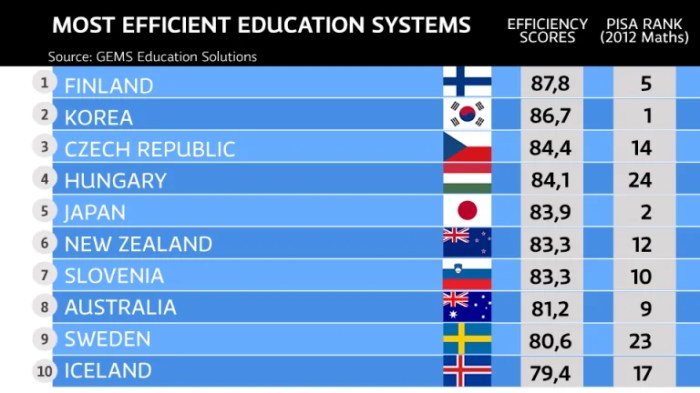
The landscape of higher education rankings is complex and multifaceted, with national and global rankings serving different purposes and emphasizing varied metrics. Understanding their distinct methodologies and impacts is crucial for educational stakeholders, as these rankings can shape institutional strategies and policies.National rankings primarily focus on the educational landscape within a specific country, evaluating institutions based on criteria that reflect national educational goals and standards.
These rankings often take into account factors such as graduation rates, employment outcomes, and regional contributions. In contrast, global rankings assess universities on a broader scale, incorporating international metrics like research output and global reputation. This distinction leads to different methodologies, which can significantly impact how institutions are perceived both locally and internationally.
Methodological Differences
The methodologies employed in national and global rankings highlight their different emphases and goals. National rankings often concentrate on metrics that resonate with local stakeholders, while global rankings strive to provide an international perspective. Key differences include:
- Focus on Metrics: National rankings may prioritize regional enrollment numbers and local job market alignment, while global rankings often emphasize research publications and international collaboration.
- Assessment Criteria: Global rankings typically use a common set of criteria across countries, whereas national rankings may adapt their benchmarks to reflect local educational objectives.
- Data Sources: National rankings frequently rely on government data, institutional reports, and national surveys. In contrast, global rankings utilize a mix of data from international surveys, bibliometric databases, and institutional submissions.
Impact of Global Rankings on Local Educational Policies
Global rankings can exert significant influence on local educational policies, often prompting institutions to align their strategies with international expectations. This influence can manifest in various ways:
- Policy Revisions: Countries may adjust their educational policies to improve their institutions’ standings in global rankings, focusing on enhancing research funding or promoting international partnerships.
- Resource Allocation: Institutions might allocate more resources toward research and internationalization efforts to gain recognition in global assessments, affecting local educational priorities.
- Public Perception: The visibility of global rankings can shift public perception of higher education, leading to increased competition among institutions to enhance their global standing.
Perceptions of Rankings Across Different Countries
Different countries exhibit varying attitudes toward the significance of higher education rankings, reflecting cultural and systemic differences in education. Some insights include:
- Emphasis on Global Standards: In countries with strong globalization, such as the UK and the USA, higher education rankings are widely acknowledged as benchmarks for quality and competitiveness.
- Local Priorities: In some nations, such as Germany and France, there is a greater emphasis on national achievements and local relevance, leading to skepticism towards global rankings.
- Emerging Economies: Countries like China and India are increasingly prioritizing their global rankings as part of national strategies to enhance their higher education systems and attract international students.
Final Conclusion
In summary, Higher Education Rankings have become a fundamental aspect of the academic landscape, shaping decisions for students and institutions alike. While they offer valuable insights into institutional quality and reputation, it’s essential to approach them with a critical eye, acknowledging both their benefits and limitations. As we look ahead, the future of these rankings will likely reflect a more inclusive and nuanced understanding of educational excellence.
Commonly Asked Questions: Higher Education Rankings
What are Higher Education Rankings based on?
Higher Education Rankings are typically based on a variety of criteria, including academic reputation, research output, faculty qualifications, and student satisfaction.
Why are Higher Education Rankings important?
They help students make informed decisions about their education and provide institutions with goals to strive towards in terms of quality and reputation.
Do rankings affect university funding?
Yes, universities often use their rankings to attract funding and resources, as higher rankings can lead to more public and private financial support.
How often are Higher Education Rankings updated?
Most major ranking systems are updated annually, but some may release quarterly or biannual updates based on new data.
Can rankings misrepresent a university’s quality?
Yes, rankings can sometimes oversimplify complex factors and may not accurately reflect the unique strengths or weaknesses of an institution.